

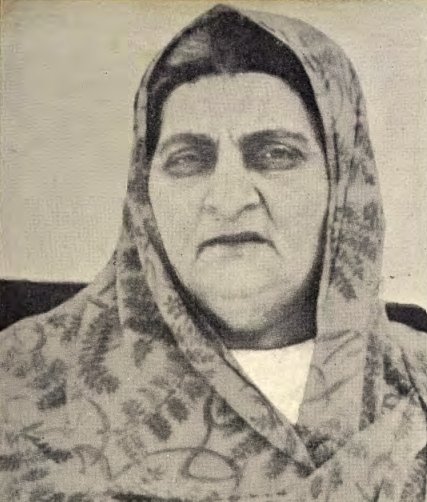
Hajiani Hanifa Bai pioneered women's education in Karachi. Little is known of her early life, other than that her father, Abdul Ghani Haji Noor Mohammad, traded in cotton yarn, seeds and grains in Mysore (now Karnataka, India), and the family lived modestly. As a young girl, she received no formal education and could read and write only in Gujarati.
At thirteen, she married Dawood Yaqoob Gandhi, as his fourth wife, and had eight children with him, two of whom died in childhood. When her husband died in 1927, she became matriarch of the household in Bantva, which included her sons and their families, her widowed daughter Aisha Bai and her children, her widowed stepmother, and her sister Bai Maryam, who had also been widowed early. She ran the household with meticulousness, strictness, and a strong focus on family values, placing great emphasis on the family staying together. She and her sister remained close throughout their lives, jointly engaging in social and philanthropic work.
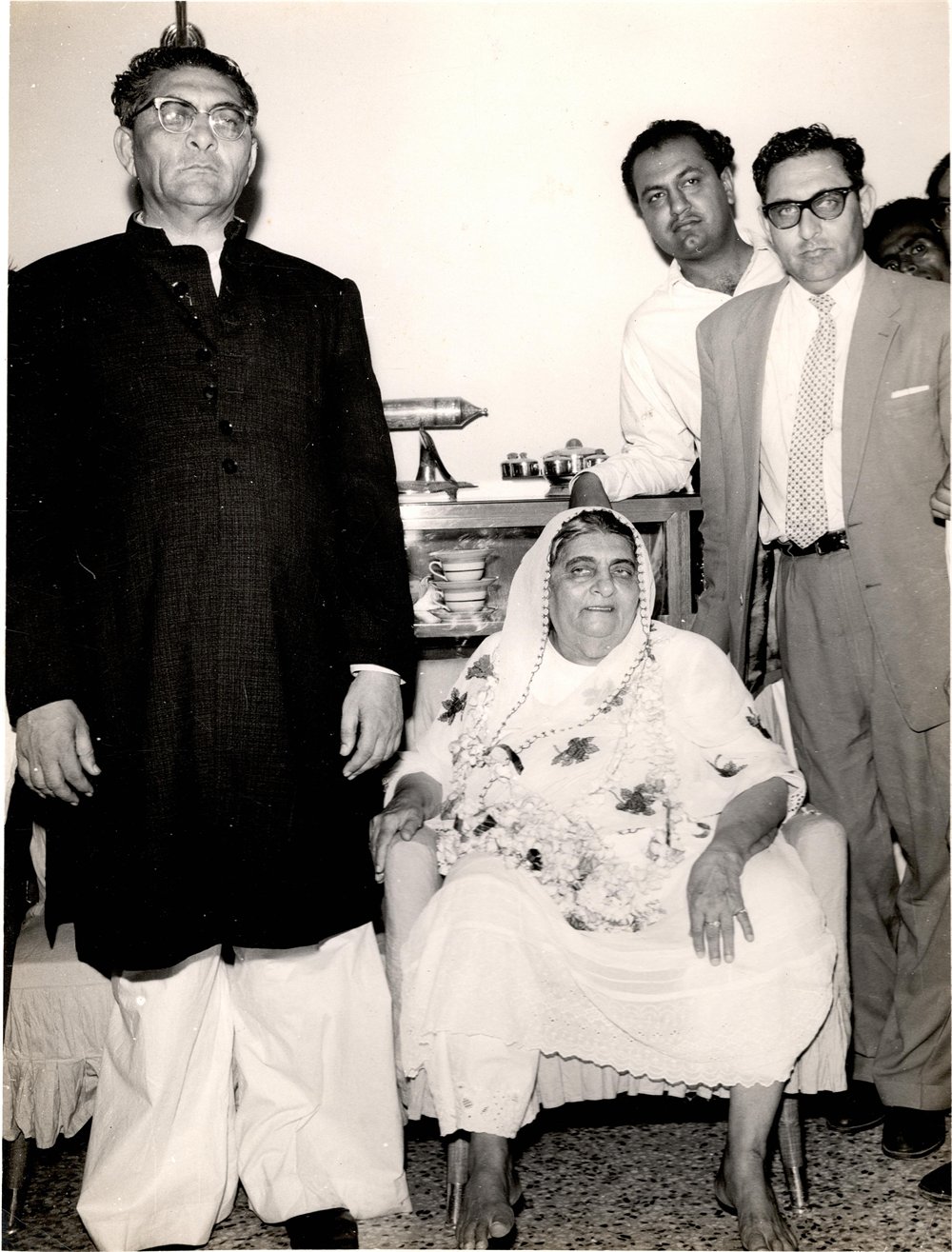 Ahmed (left) and Siddique (right) Dawood standing beside their Mother Hanifa Bai
In November 1947, she migrated with her family to Pakistan, settling in Karachi, where she continued this close partnership with her sister even after the move. She purchased properties around Jamshed Quarters for her children, among them a house bought in 1948 for her daughter, Aisha Bai Dawood, today known as TDF Ghar.
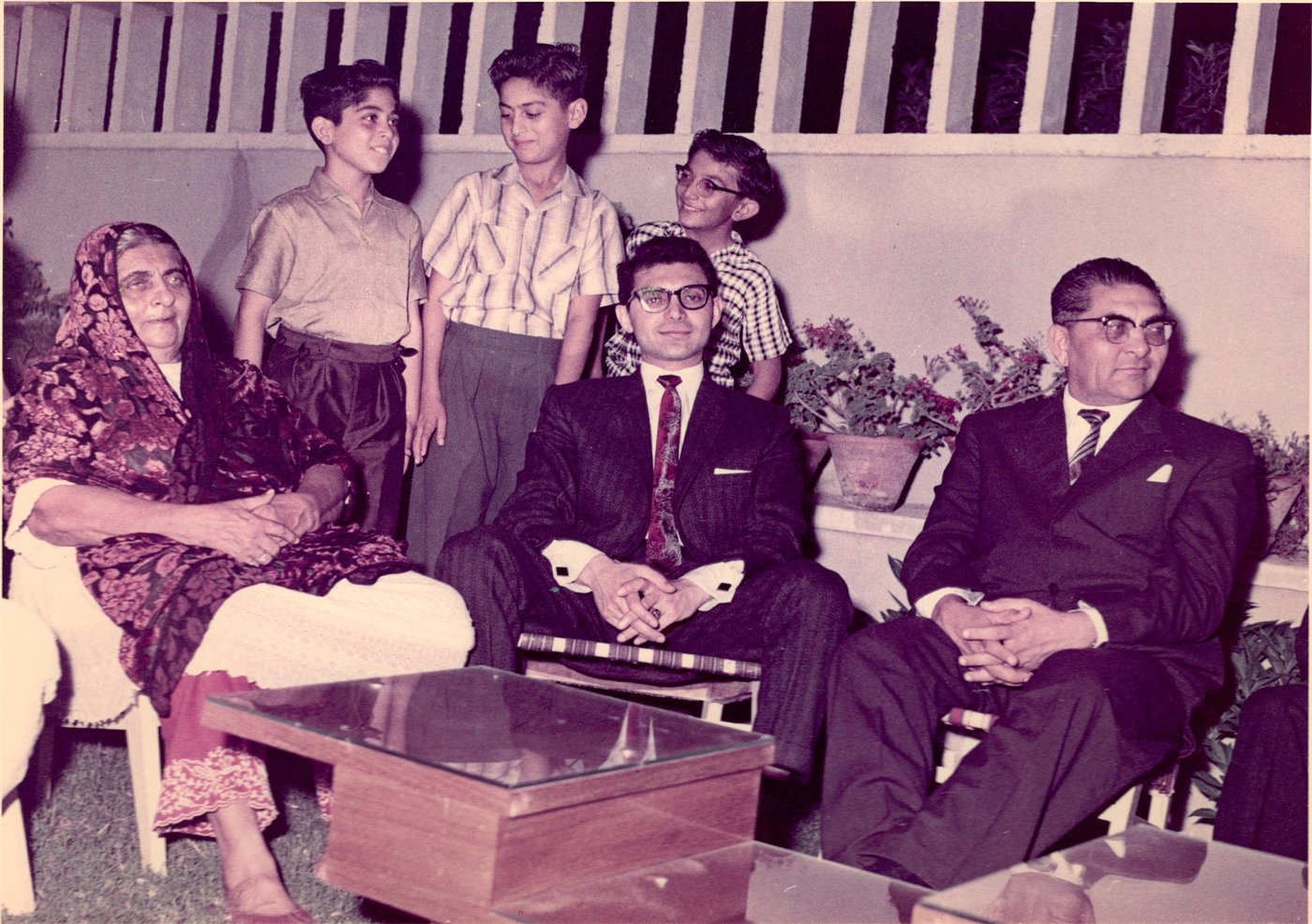 Hanifa Bai seated with her son, Ahmed Dawood (far right), alongside family members at their family home.
In Karachi, she turned her attention to women's education, a cause she pursued despite never having received formal schooling herself. She made a point of ensuring her granddaughters received the same education as her grandsons, and personally rewarded girls with prizes and gifts for academic achievement. In the years following Partition, educational opportunities for women, particularly within the Memon community, remained limited, so she established a series of schools under her name, known as the Hanifa Hajiani Girls Schools, among them the Hanifa Bai Hajiani Government Girls Secondary School in Saddar and the Hajiani Hanifabai Memon Girls School in Gari Khata. Around the same period, working alongside her close friend Khadijah Bai, founder of the Ronaq-e-Islam school for young Memon women who could not otherwise afford an education, she also founded institutions focused on vocational training: the Hanifa Hajiani Haji Ghani Silai Ghar, a sewing and vocational training centre for women, and the Hajiani Hanifa Bai Dawood Ladies Training Institute, which taught business, arts, and technical skills to women from underprivileged backgrounds.
In the late 1950s or early 1960s, she presided over the Pakistan Memon Women Educational Society (PMWES), with the primary aim of propagating education among women and girls of the Memon community. Under its objectives, the society sought to establish and maintain schools, colleges, madrassas, boarding houses, and libraries; provide stipends, scholarships, prizes, and books; support poor and needy female students; and acquire land, funding, and donations to further these aims, while coordinating with other like-minded organisations. Membership was open to any Memon resident of Karachi over the age of eighteen.
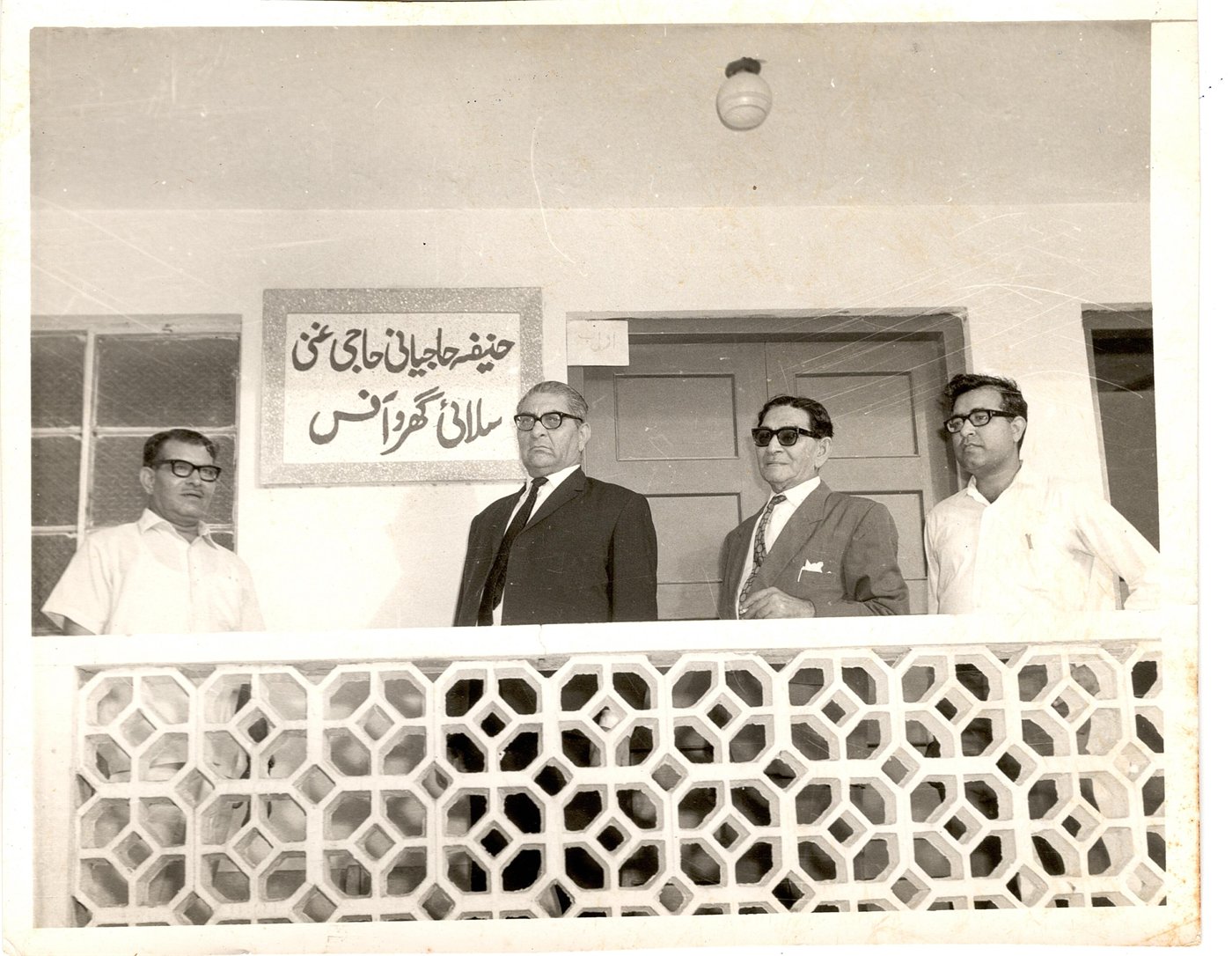 Ahmed Dawood (second from left), standing in front of the Hanifa Hajiani Haji Ghani Silai Ghar office.
As the family's industrial ventures grew under the next generation, chiefly her sons Ahmed, Suleman, Siddique and Ali Mohammad, she remained closely involved. In 1951, she laid the foundation stone of Dawood Cotton Mills Limited at Landhi, Karachi, the Dawood Group's first industrial enterprise in Pakistan. In 1962, she attended the inauguration of Dawood College of Engineering and Technology (known today as Dawood University of Engineering and Technology), and in 1963 she laid the foundation stone of the hydrogen peroxide plant at Dawood Cotton Mills. During this period, she also grew close with President Ayub Khan, who would visit her for blessings and prayers, and she was often seen alongside her sons at major public events, reflecting both her closeness with her sons and her continued involvement in family decision-making, even as they went on to expand the business considerably in her later years.
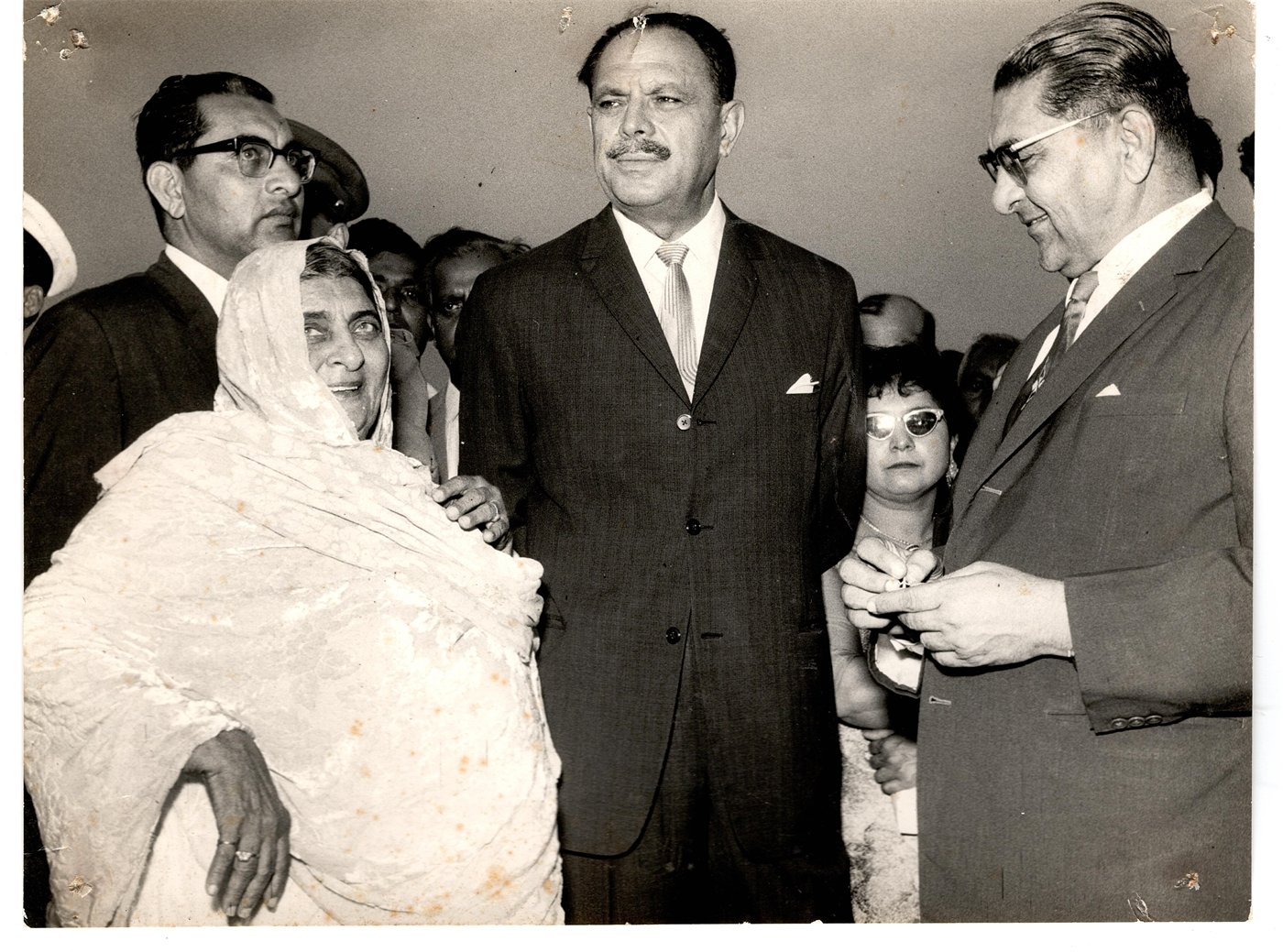 Hanifa Bai and her sons, Ali Mohamed and Ahmed Dawood, with President Ayub Khan at the Dawood College of Engineering and Technology (DCET) inauguration
Hanifa Bai passed away in 1970. The family's philanthropic work continues in her name: several schools have been established in her memory, including Dawood Public School, Karachi; F.G. Dawood Public School, Muzaffarabad; and Dawood Public School (known as Dawood Public School & College) in Jessore, Bangladesh.


